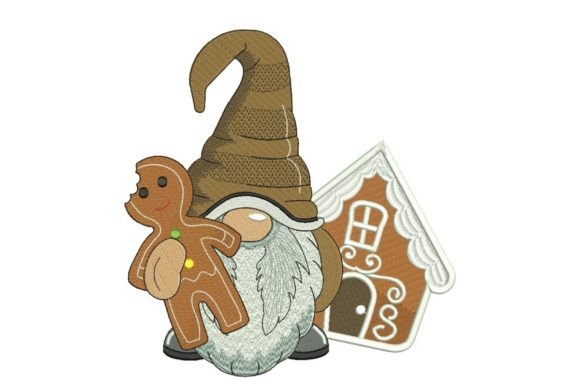
Gnome with Gingerbread Man: A Designer's Real-World Review
When I first opened the file for Gnome with Gingerbread Man, my immediate reaction wasn't about stitch counts or hoop sizes; it was about the mood. As a designer who spends hours evaluating digital assets for both personal joy and commercial viability, I look for that specific spark where a design feels ready to become a tangible product. This piece delivers exactly that. It captures the whimsical, cozy essence of the holiday season without feeling cluttered or overly complicated. The interaction between the gnome character and the gingerbread figure creates a narrative that is instantly recognizable, making it an ideal candidate for anything from a boutique gift tag to a high-end holiday sweatshirt.
The layout strikes a balance that many designers struggle to find. It is fun and approachable, yet retains a level of elegance that prevents it from looking like a cheap novelty item. When you consider the target audience—crafters, Etsy sellers, and small business owners—the visual personality of this design is crucial. It suggests warmth and hospitality, which translates beautifully into finished products. Whether you are creating a custom apron for a kitchen workshop or a soft baby blanket for a nursery, Gnome with Gingerbread Man sets the right tone. It feels like a story waiting to be told through thread.
Real-World Application: From Screen to Stitch
I recently put this design to the test in a scenario that mirrors what many of you face when preparing for the holiday rush. I wanted to create a limited-run collection of embroidered tote bags for a local craft fair. The goal was to produce items that felt handmade and thoughtful but could be produced efficiently enough to meet demand. I selected a natural canvas tote bag as the base and began digitizing the placement for Gnome with Gingerbread Man.
The execution was surprisingly smooth. Because the design is described as easy to stitch, the machine handled the transitions between the different elements with minimal thread breaks. On the canvas fabric, the design held its shape perfectly. The contrast between the dark tones often used for the gnome's beard and the lighter background of the gingerbread man created a crisp visual that popped against the neutral fabric. Customers at the fair didn't just see a picture; they saw a cohesive brand element. The design elevated the perceived value of the tote bag, turning a simple accessory into a memorable keepsake.
This same versatility applies to other high-demand categories. Imagine this design stitched onto a heavy cotton sweatshirt for a family matching set. The density of the fill stitches would provide a nice texture against the fleece, adding depth that screen printing simply cannot achieve. For those selling personalized gifts, the charm of the gnome allows for easy customization. You could add a monogram nearby or change the thread colors to match a specific client's palette while keeping the core imagery intact. It is a robust foundation for a commercial embroidery project.
Navigating Fabric and Surface Challenges
While Gnome with Gingerbread Man is versatile, every experienced embroiderer knows that success lies in knowing where to apply caution. Not every surface is suitable for every design, and understanding these limitations protects your reputation and your customers' satisfaction. If you are planning to use this design on a curved surface like a baseball cap, you must be mindful of the distortion that can occur around the seams. The rounded nature of the gnome might stretch slightly if not stabilized correctly, so using a stiff backing and testing the curve is essential before committing to a production run.
Texture is another factor that requires careful consideration. While the design looks elegant on smooth fabrics like cotton twill or linen, applying it to highly textured materials like chunky bouclé or heavy sherpa can obscure the finer details. The running stitches and satin edges might get lost in the pile of the fabric, reducing the clarity of the image. Similarly, thin or stretchy fabrics pose a risk. Without adequate stabilizer, the tension required to stitch the fill areas could cause the fabric to pucker, ruining the professional finish of the embroidery file. Always test on scrap material that matches your final product's weight and drape.
Dense stitch areas are also worth noting. If the design includes intricate details in the gnome's hat or the gingerbread man's buttons, ensure your machine is capable of handling the density without breaking needles or threads. Dark fabrics present their own challenge; while the design can certainly work on them, the thread color contrast becomes critical. Lighter threads may require underlay adjustments to ensure coverage, while darker threads might need a topstitch variation to make the details stand out against the background.
Design Quality and Commercial Viability
For small shop owners and digital product sellers, the question is always: does this design justify the price and effort? Gnome with Gingerbread Man answers yes by offering strong visual appeal that drives customer engagement. In the world of handmade products, buyers are looking for uniqueness and quality. A design that looks clean, well-proportioned, and professionally executed builds trust. When a customer sees a crisp, well-stitched gnome on a pillow cover or a tea towel, they associate that quality with the entire brand.
The design's flexibility makes it a valuable asset for various marketing strategies. You can use it in printable mockups to showcase potential products on social media, allowing you to sell the concept before the physical item is even made. Its Christmas theme ensures relevance during the peak shopping season, but the playful nature of the characters means it can extend beyond just the holidays into general winter decor or year-round home accents. This longevity adds to the ROI of the purchase.
However, to maintain that professional edge, you must adhere to strict quality control measures. Before releasing any finished product featuring Gnome with Gingerbread Man, inspect the small details closely. Are the corners sharp? Is the stitching consistent across the entire piece? Does the design sit flat without pulling? These factors determine whether a product feels like a mass-produced commodity or a bespoke creation.
Essential Notes for the Practical Designer
- Test First: Never skip the test run. Use scrap fabric to check how the stitch density interacts with your specific material. This step saves time and money on ruined inventory.
- Stabilizer Selection: The choice of stabilizer is as important as the design itself. Ensure you are using the correct type (cut-away, tear-away, or wash-away) to support the weight of the stitches, especially for heavier applications like sweatshirts.
- Thread Contrast: Experiment with different thread colors to maximize visibility. A light thread on a dark fabric might require a denser underlay to prevent the background from showing through.
- Hoop Size Verification: Confirm that your machine's hoop size accommodates the design dimensions without cutting off any elements. Check the file specifications carefully.
- Licensing Clarity: If you intend to sell finished items or distribute the digital file, review the license terms explicitly. Some designs allow for commercial use, while others restrict resale.
- Mockup Testing: View the design in black and white to ensure the composition works without relying on color alone. This helps identify any structural weaknesses in the layout.
In conclusion, Gnome with Gingerbread Man is more than just a festive image; it is a functional tool for creative entrepreneurs. It offers a blend of charm and practicality that fits seamlessly into a wide array of projects, from baby clothing to boutique branding. By approaching it with the right preparation and attention to detail, you can transform a simple digital file into a standout finished product that resonates with your audience. Whether you are a hobbyist looking to create a unique gift or a seasoned seller expanding your catalog, this design provides a solid foundation for your next embroidery adventure.