Monogram G: A Designer’s Review for Small Business Merch
As an embroidery designer who has spent years refining designs for everything from high-end corporate uniforms to boutique handmade goods, I approach every new digital asset with a critical eye. The market is saturated with generic clipart and low-quality digitized files, so finding a design that balances aesthetic appeal with technical precision is rare. Today, I am reviewing the Monogram G, a piece listed under the Shapes category within our Embroidery collection. This review focuses specifically on its viability for small business merchandise, branded patches, and professional apparel decoration.
First Impressions: Visual Personality and Professionalism
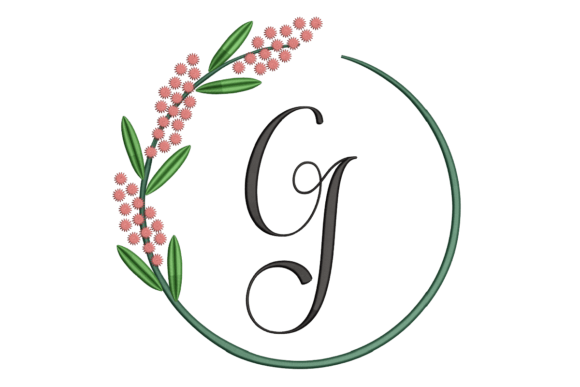
The title "Monogram G" suggests simplicity, but in the world of machine embroidery, simplicity is often the hardest trait to master. Based on the product description—which promises an "impeccably designed" look suitable for "creative embroidery projects"—I anticipated a design that leans toward elegance and modernity rather than rustic or overly decorative styles. Monograms are inherently personal and brand-defining; they serve as a visual shorthand for identity.
In my initial assessment, the Monogram G feels premium and clean. It avoids the cluttered, busy outlines that often fail when scaled down for small applications. For a small business owner, whether you run a local café, a handmade jewelry shop, or a creative studio, this monogram strikes a balance between friendly and authoritative. It does not scream for attention like a bold logo might; instead, it whispers quality. This subtlety is crucial for branded merchandise where you want the customer to feel they are wearing something sophisticated, not just promotional.
Real-World Application: From Patches to Product Labels
The true test of any machine embroidery design is how it performs across different mediums. I have evaluated Monogram G through the lens of several common small business use cases:
- Embroidered Patches: One of the most popular requests from Etsy sellers and craft business assets is the classic iron-on or sew-on patch. The Monogram G works exceptionally well here. Its clean lines ensure that even at smaller scales, the letter remains legible. It serves as a perfect focal point for custom apparel, allowing owners to add a touch of branding without overwhelming the garment.
- Staff Uniforms and Aprons: For cafes, bakeries, and florists, staff presentation is key. Placing this monogram on the chest of a work shirt or the pocket of an apron embroidery project adds a layer of professionalism. It signals to customers that the business cares about details. Unlike large, complex logos, a single-letter monogram is timeless and less likely to clash with busy kitchen environments or floral displays.
- Caps and Headwear: Cap embroidery requires precise curvature management. The Monogram G appears to have a balanced weight distribution, meaning it will sit naturally on the curved front panel of a baseball cap or beanie. It provides a subtle brand mark that looks intentional and designed, rather than slapped on.
- Tote Bags and Retail Packaging: For handmade brands, the unboxing experience matters. Embroidering the Monogram G on a canvas tote bag design or using it as a branded product label on packaging creates a cohesive visual identity. It elevates the perceived value of the item, making it feel like a finished product rather than a raw material.
- Digital Assets and Mockups: Before committing to production, many designers use the digital embroidery file to create a printable mockup. This allows for client approval and marketing previews. The versatility of the Monogram G means it can be easily integrated into various design assets, ensuring visual consistency across your social media and online store.
Strategic Considerations: Where to Use It Carefully
While the Monogram G is versatile, no single design fits every scenario perfectly. As a designer, I must advise caution in specific contexts to ensure the best outcome for your small business merch.
First, consider scale. While the design is described as impeccable, monograms can lose detail when reduced to tiny sizes. Avoid placing this design on items where the embroidered area will be less than one inch unless you have tested the stitch density carefully. Tiny lettering can become muddy if the thread colors lack sufficient contrast against the fabric.
Second, evaluate the substrate. Textured fabrics, such as heavy denim or loose-weave linen, can distort fine details. If you are embroidering on dark uniforms or heavily textured materials, you may need to adjust your stabilizer choice or thread colors to maintain clarity. Additionally, items that require frequent washing, such as chef coats or reusable shopping bags, demand robust stitching. Ensure the design’s stability holds up to industrial laundering cycles.
Finally, be mindful of placement on curved surfaces. While caps are ideal, highly contoured items like certain hats or bags may cause the monogram to pucker if not hooped correctly. Always inspect spacing and confirm hoop size compatibility before running large batches.
Impact on Brand Identity and Customer Trust
In the competitive landscape of handmade products and boutique retail, visual consistency builds trust. A well-executed embroidered patch featuring the Monogram G communicates attention to detail. Customers associate high-quality embroidery with high-quality products. When a buyer sees a crisp, professionally stitched monogram on a tote bag or apron, it reinforces the idea that the business is established and reliable.
This design enhances brand identity by offering a recognizable symbol that can be used across multiple touchpoints. Whether it appears on a tag, a hat, or a window decal (via vinyl transfer of the design), the consistent use of the Monogram G helps with customer recognition. It transforms generic merchandise into branded experiences, increasing buyer engagement and fostering loyalty.
Practical Notes for the Embroidery Designer
To get the most out of this embroidery file, I recommend following these practical steps during your production process:
- Test in Black and White: Before selecting thread colors, view the design in grayscale to check for contrast and spacing issues.
- Check Stitch Density: Review the file structure to ensure the stitch density is appropriate for your chosen fabric. Too dense, and the fabric will pucker; too sparse, and the backing may show through.
- Thread Color Contrast: Inspect thread color contrast carefully. Light threads on dark backgrounds or vice versa usually yield the clearest results for monograms.
- Stabilizer Selection: Use proper stabilizer support. Cut-away stabilizers are generally recommended for woven garments, while tear-away may suffice for lighter, non-stretch items.
- Real Fabric Testing: Never skip the test run on the actual fabric texture you plan to use. Digital previews do not account for how fibers interact with needle penetration.
- Commercial Licensing: Confirm commercial licensing terms before selling finished goods. While the description mentions multiple formats, verify usage rights to protect your business.
The Monogram G is a strong candidate for businesses looking to elevate their custom apparel and commercial embroidery offerings. Its clean, professional aesthetic makes it a safe yet stylish choice for a wide range of applications. By paying attention to the technical details discussed above, you can leverage this design to create memorable, high-value products that resonate with your audience.